
How to Read Soil pH, Lime and Organic Matter Results Together
A single pH value cannot determine an application plan. Use this practical framework to interpret lime, organic matter, texture, EC and irrigation water results together.
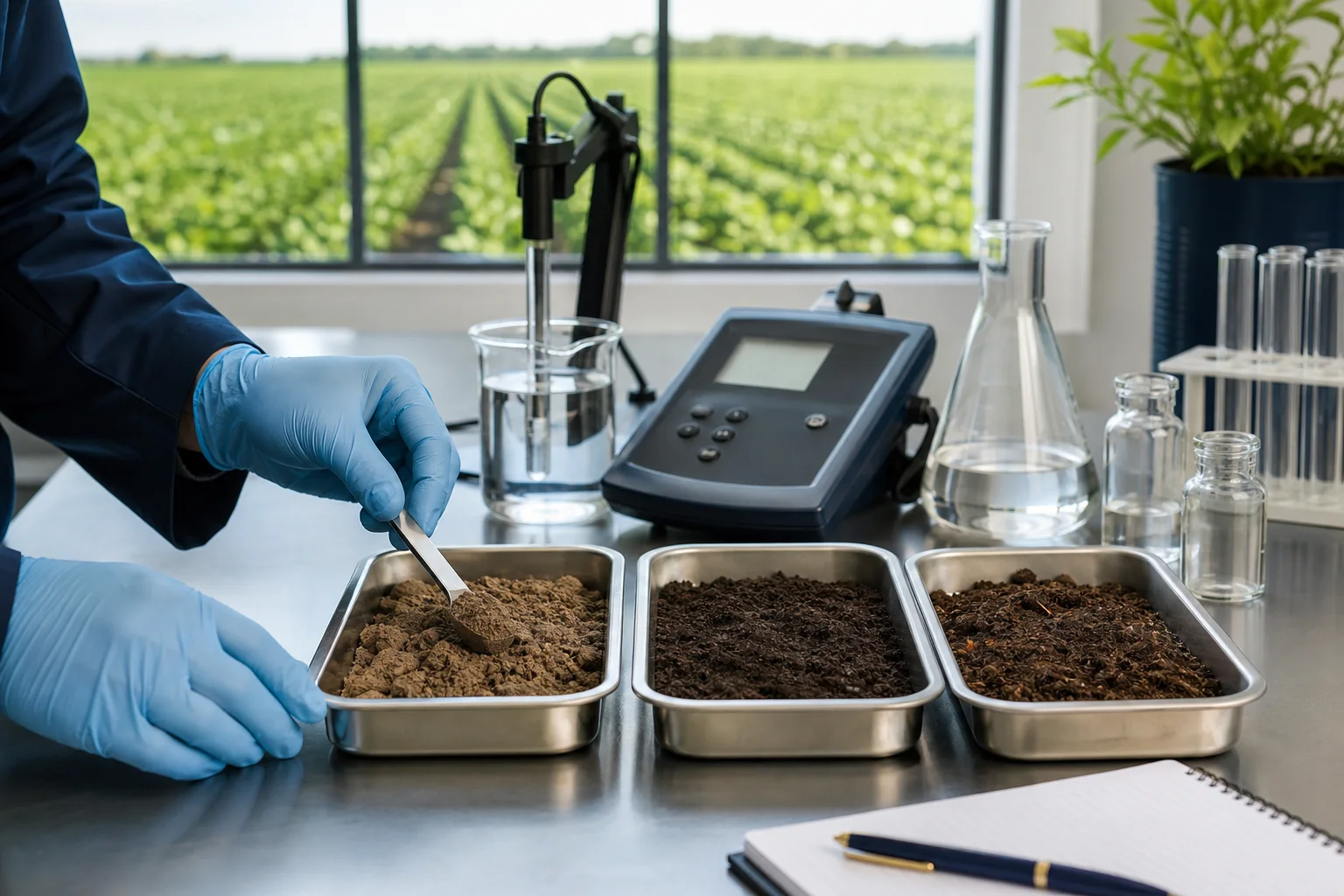
A soil test is not a “good or bad” report card; it provides the starting data for management decisions. A pH value alone does not establish whether elemental sulfur is needed or how much should be applied. Two soils with the same pH can respond very differently because of their lime, clay, organic matter, salinity and irrigation water.
- First, check how representative the sample is and which laboratory method was used.
- Read pH together with lime content and texture.
- Include organic matter, EC and irrigation water in the management plan.
- Seek a local expert assessment for the intended crop and root zone.
Correct interpretation starts with the right sample
No matter how accurate the laboratory measurement, a sample that does not represent the field can lead to the wrong decision. Areas that differ significantly in color, slope, drainage, crop growth or previous treatments should be sampled separately. Field edges, areas around fertilizer heaps, waterlogged hollows and unusual spots should not be included in the general sample.
Sampling depth is determined according to the target crop and laboratory protocol. For repeat tests, using the same season, similar moisture conditions, the same depth and the same laboratory method makes changes easier to compare.
What does pH tell you, and what does it not?
pH indicates the acidity or alkalinity of the soil solution and is related to the availability of many nutrients. It does not, on its own, show total lime content, buffering capacity or the amount of elemental sulfur required. The measurement method and soil-to-solution ratio can also affect the result, which is why the method stated in the report matters.
Why is lime as important as pH?
Carbonate-rich soils tend to neutralize added acidity. This is called buffering. Of two soils with similar pH readings, the one with more lime may resist a pH change more strongly. Oregon State University Extension specifically notes that soils with high carbonate content can be difficult to acidify.
Simple tables stating “apply this amount of sulfur at pH 8” are therefore not reliable for every field. Application rates should not be calculated without knowing lime content, texture and the target depth.
How does organic matter affect the outcome?
Organic matter is linked to aggregate formation, water retention, aeration, nutrient cycling and microbial activity. Low organic matter cannot be corrected with elemental sulfur alone. Crop residues, suitable organic inputs, cover crops and tillage strategy should be planned together according to local conditions.
A framework for reading test results together
| Indicator | What might a high or low result suggest? | Next check |
|---|---|---|
| pH | Soil reaction in relation to nutrient availability and the target crop | Method, target pH, lime and irrigation water |
| Lime | Buffering of acidity and management of certain nutrients | Active lime, texture and the root zone |
| Organic matter | A general indicator of soil structure and biological processes | Field history and a long-term organic matter plan |
| EC | An indication of the total soluble salt load | Irrigation water, drainage and ion-specific analysis |
| Texture | Water retention, aeration and buffering behavior | Application method and tillage conditions |
| Irrigation water | May be a continuing source of salt, bicarbonate and pH effects | Water analysis and seasonal usage volume |
How do three example scenarios differ?
High pH + high lime content
Changing pH may be more difficult. Instead of expecting a quick, surface-level result, root zone management, water quality, product form and long-term monitoring should be planned together.
High pH + low organic matter
Alongside pH management, a separate organic matter strategy is needed to support soil structure and biological activity. A single input should not be expected to solve every problem.
High pH + high EC
Acidification may not be the only priority. Applying a product without assessing the salt source, drainage and irrigation water can increase risk.
Pre-application checklist
- Verify the method, units and sampling depth in the laboratory report.
- Assess the target crop’s optimum conditions with a local agricultural adviser.
- Consider soil and irrigation water results within the same plan.
- Check the current revisions of the product label, TDS and SDS.
- Define a small, traceable application plan and a repeat testing date in advance.
A field-specific decision is required: This content helps you interpret test results; it is not a treatment prescription or an application-rate recommendation. Obtain an assessment for the field from a qualified agronomist or laboratory.
Related Köseoğlu resources
Read about oxidation in Elemental Sulfur and Soil pH: Understanding the Relationship, and explore the product’s technical information on the Elemental Micronized Sulfur Powder page.
Get technical guidance for your application.
Contact our team for product selection, technical documents, or a quote.