
Elemental Sulfur and Soil pH: Understanding the Relationship
Learn how elemental sulfur is oxidized in soil, why pH changes take time, and which test results should be considered together before planning an application.
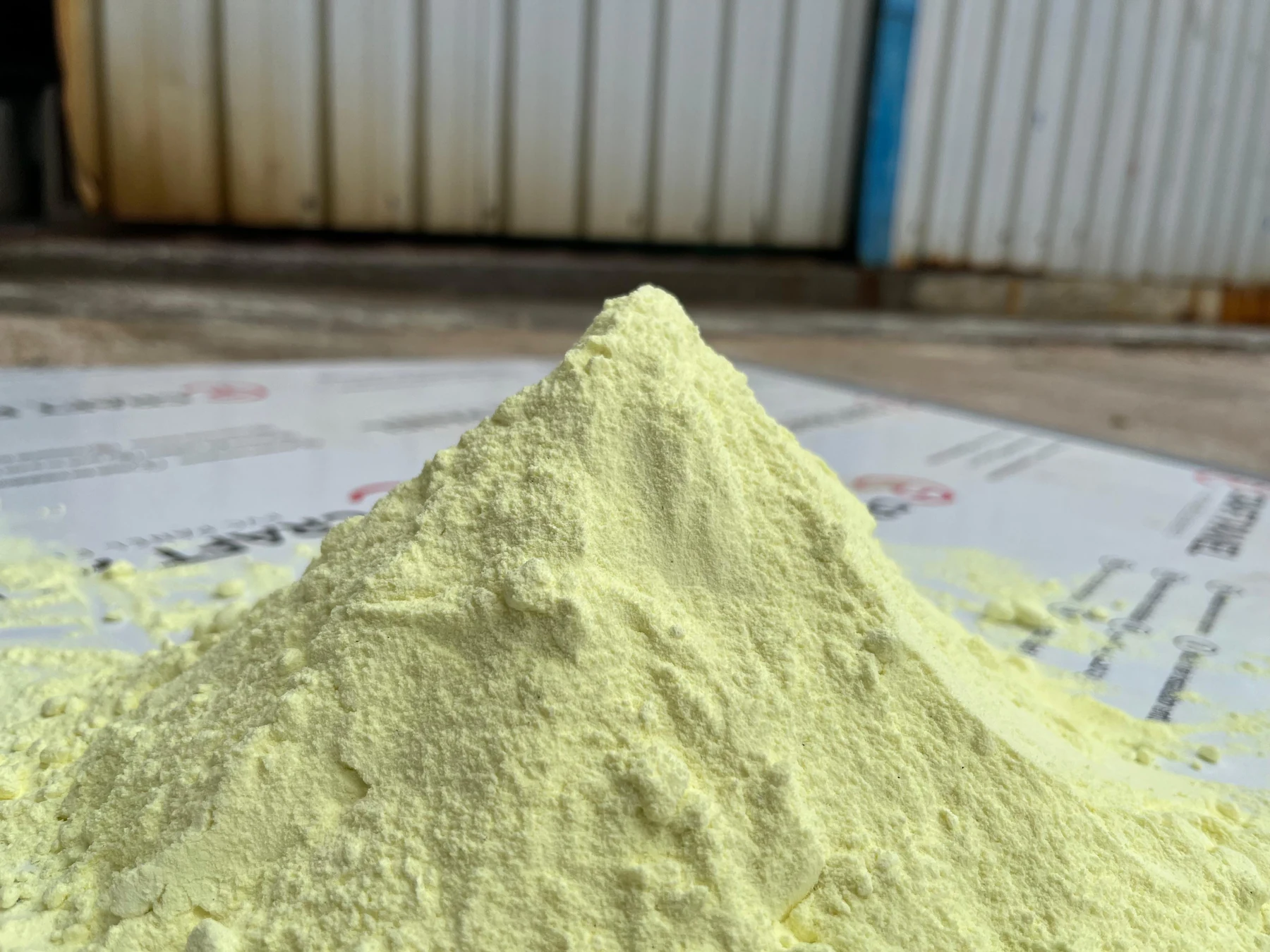
Elemental sulfur is one of the tools that can be considered when managing alkaline soil, but it is not a fast-acting acid that lowers pH as soon as it is applied. Its effect develops as soil microorganisms oxidize the elemental sulfur. Alongside the right product form, soil temperature, moisture, aeration, lime content and timing all influence the outcome.
- Elemental sulfur must first undergo microbial oxidation.
- A change in pH cannot be guaranteed within days; under most conditions, the process takes time.
- Application decisions should consider lime content, texture, organic matter and irrigation water results alongside pH.
- The application rate and method should be based on the current product label and expert assessment.
How does elemental sulfur work in soil?
Elemental sulfur does not behave like a substance that dissolves directly in water and spreads throughout the soil. Under suitable environmental conditions, sulfur-oxidizing microorganisms gradually convert elemental sulfur into sulfate. This biological process generates acidity and can alter the soil reaction. Sulfate is also the main form of sulfur available to plants.
Oregon State University Extension emphasizes that naturally occurring bacteria carry out this conversion and that soil acidification takes time. Penn State Extension likewise notes that the oxidation of elemental sulfur to sulfate can take months in many situations. Together, these points explain why an immediate drop in pH should not be expected after application.
Main factors that determine the rate of action
Soil temperature and moisture
Microbial activity slows in very cold or excessively dry conditions. Adequate moisture and aeration need to be present together. Saturated soil with little air is not ideal either. Local soil and climate conditions should therefore guide decisions more than the calendar alone.
Particle size and distribution
A more finely ground product can offer a larger surface area. However, the word “fine” is not enough on its own: the technical data sheet should specify the measurement method, particle size distribution and physical form. Even a very fine product may not deliver the expected field performance if it is distributed unevenly.
Lime content and buffering capacity
Soils rich in lime, with a heavy texture or with high buffering capacity are more resistant to changes in pH. Two fields with the same initial pH may therefore have different requirements. Decisions based on pH alone are particularly misleading in soils with high free lime content.
Organic matter and biological activity
Organic matter is closely linked to water retention, aggregate structure and microbial life. Soil with low organic matter calls for a comprehensive soil management approach rather than a focus on a single input.
Which soil test results should be read together?
| Test parameter | What does it show? | Why does it matter? |
|---|---|---|
| pH | An indicator of the current soil reaction | It provides a starting point for assessing nutrient availability and management objectives. |
| Lime / carbonate | The soil’s capacity to buffer acidity | It helps explain how difficult a pH change may be. |
| Organic matter | An indicator related to soil structure and biological activity | It influences the long-term soil management plan of which the application is a part. |
| Texture | The proportions of sand, silt and clay | It affects water retention, aeration and buffering capacity. |
| EC / salinity | The overall level of dissolved salts | It should be assessed alongside other results to avoid inappropriate application decisions. |
| Irrigation water | The effects of pH, bicarbonate and salinity | It may contribute to the soil becoming alkaline again over time. |
How can you develop a safe application plan?
- Take a representative sample: follow the laboratory’s sampling depth and method, without combining distinct problem areas in one sample.
- Define the objective: is the aim soil pH management, a sulfur source for a plant nutrition program, or another product requirement?
- Check the product documentation: verify purity, physical form, particle information, application guidance and safety notes against the current TDS/SDS.
- Seek local expert advice: the amount should be determined with the crop, soil, climate, irrigation water and target pH in mind.
- Plan follow-up sampling: repeat the analysis using the same sampling method and a suitable interval to monitor change.
Important: This article provides general information. It does not specify a field-specific application rate or timing, or guarantee results. Before application, refer to the current product label, TDS/SDS, soil analysis and advice from a qualified professional.
When should different product forms be considered?
The terms powder, micronized, granular and liquid do not mean that products work in the same way. Formulation, elemental sulfur content, additional components, particle size distribution and application equipment affect the choice. You can compare the current technical information on Köseoğlu Akkükürt’s Elemental Micronized Sulfur Powder and Granular Sulfur pages, or request technical information for your specific application.
Get technical guidance for your application.
Contact our team for product selection, technical documents, or a quote.